Hair Loss and Alopecia: Causes, Types, Symptoms and Treatment Options
Hair loss is a common concern affecting millions of people worldwide. While losing up to 100 hairs per day is considered normal, excessive or persistent shedding may signal an underlying medical condition known as alopecia.
Alopecia is a broad clinical term used to describe partial or complete hair loss, which can occur on the scalp, eyebrows, eyelashes or other areas of the body. Around 2% of people globally will experience some form of alopecia during their lifetime, and the pattern, severity and regrowth potential vary greatly depending on the cause.
This guide explores the most common causes of hair loss, the main types of alopecia, how hair loss is classified in men and women, and which modern treatments—including hair transplant surgery—may be effective.
- What Is Alopecia? Understanding Hair Loss as a Medical Condition
- What Are the Most Common Causes of Hair Loss?
- What Are the Most Common Causes of Hair Loss?
- What Illnesses Can Cause Hair Loss?
- How Can I Identify the Signs and Stages of Hair Loss in Men and Women?
- What Are the Different Types of Alopecia and Hair Loss Conditions?
- Androgenetic Alopecia (Male and Female Pattern Hair Loss)
- Alopecia Areata (Autoimmune Patchy Hair Loss)
- Traction Alopecia
- Sudden Hair Loss
- Scarring Alopecia and Central Centrifugal Cicatricial Alopecia (CCCA)
- Hair Surgery and NHS Access in the UK
- How to Prevent Hair Loss and Protect Hair Health?
- How Can Elithair Help With Alopecia and Hair Loss?
- FAQ
What Is Alopecia? Understanding Hair Loss as a Medical Condition
Alopecia refers to chronic or abnormal hair loss beyond the natural shedding cycle. It can be temporary or permanent and may result from:
- Autoimmune disorders
- Genetic and hormonal changes
- Scarring alopecias
- Stress or illness
- Nutritional deficiencies
- Certain medications
Because alopecia can have many causes, diagnosis from a GP, dermatologist or Trichologist is essential before treatment.
What Are the Most Common Causes of Hair Loss?
There are a number of different types of alopecia that range from mild, to more severe hair loss. These include:
- Telogen effluvium, anagen effluvium
- Alopecia Totalis
- Alopecia Universalis
- Alopecia Barbae
- Frontal Fibrosing Alopecia (FFA)
- Cicatricial alopecia
There are, however, three that stand out as the most common among individuals around the world, which are androgenetic alopecia, alopecia areata, and traction alopecia.
What Are the Most Common Causes of Hair Loss?
Hair loss affects people of all genders, ages and ethnicities. Some of the most frequent causes include:
| Cause of Hair Loss | Description | Common Symptoms | Type of Alopecia / Condition | Is It Reversible? |
| Hormonal & Thyroid Disorders | Thyroid hormones regulate hair follicle growth. Imbalances may disrupt the hair cycle. | Diffuse thinning across the scalp | Hypothyroidism / Hyperthyroidism-related hair loss | Often reversible with treatment |
| Autoimmune Diseases | The immune system mistakenly attacks healthy hair follicles. | Sudden patchy bald spots | Alopecia areata | Sometimes reversible |
| Hereditary Hair Loss (Androgenetic Alopecia) | The most common cause of permanent hair loss, influenced by genetics and hormones. | Gradual hairline recession or crown thinning | Male & Female pattern baldness | Usually progressive, treatable but not fully reversible |
| Stress-Related Shedding | Physical or emotional stress can push hair into the resting phase early. | Sudden heavy shedding when washing or brushing | Telogen effluvium | Usually temporary |
| Nutritional Deficiencies | Low iron, vitamin D, zinc, or protein weakens follicles. | Overall thinning, weaker hair texture | Diet-related hair loss | Reversible with supplementation |
| Medications & Cancer Treatments | Certain drugs, chemotherapy, or radiotherapy may interrupt hair growth. | Widespread shedding or complete loss | Treatment-induced alopecia | Often regrowth occurs after stopping treatment |
What Illnesses Can Cause Hair Loss?
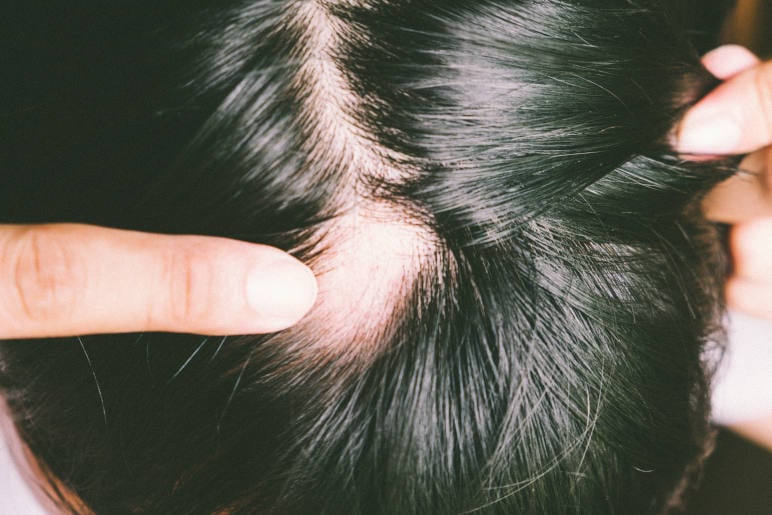
Hair loss can also be a symptom of other medical conditions, such as:
- Lupus
- Syphilis
- Tinea capitis (fungal scalp infection)
- Hormonal imbalance
- Autoimmune disorders
Because the underlying illness determines whether hair loss is temporary or permanent, medical evaluation should always come first.
How Can I Identify the Signs and Stages of Hair Loss in Men and Women?
Hair loss symptoms vary depending on the type of alopecia.
| Hair Loss Sign / Symptom | Common in Men or Women? | Possible Type of Alopecia | What It May Indicate |
| Receding hairline | Mostly Men | Androgenetic alopecia | Early-stage hairline recession, often hereditary |
| Widening parting | Mostly Women | Female pattern hair loss | Gradual thinning along the scalp parting |
| Crown thinning | Men & Women | Androgenetic alopecia | Progressive thinning at the top/back of the scalp |
| Patchy bald spots | Men & Women | Alopecia areata | Autoimmune-related sudden hair loss in patches |
| Sudden shedding during washing | Men & Women | Telogen effluvium | Temporary hair shedding often triggered by stress or illness |
| Scalp itching or inflammation | Men & Women | Scalp conditions or inflammatory alopecia | Possible irritation, infection, or underlying scalp disorder |
What Are the Different Types of Alopecia and Hair Loss Conditions?
There are many types of alopecia, each requiring a different treatment approach. Let’s explore the most common in detail.
Androgenetic Alopecia (Male and Female Pattern Hair Loss)
Androgenetic alopecia is a genetically predetermined condition caused by follicle sensitivity to androgens such as DHT.
Male Pattern Baldness and the Norwood Scale
In men, hair loss typically begins at the temples and crown. Progression is measured using the Hamilton-Norwood Scale, which tracks stages of recession and baldness.
Female Pattern Hair Loss and the Ludwig Scale
In women, hair loss often presents as diffuse thinning along the parting and crown. Severity is classified using the Ludwig Scale.
Treatments for androgenetic alopecia
Common evidence-based treatments include:
- Minoxidil (Rogaine): Topical medication applied to the scalp to promote hair growth.
- Finasteride (Propecia): Oral medication that blocks the conversion of testosterone to DHT. Has many side-effects.
- Low-level laser therapy (LLLT): Stimulates hair follicles to promote growth.
- Platelet-rich plasma (PRP) therapy: Involves injecting plasma-rich platelets into the scalp to stimulate hair growth.
- Hair transplant: Surgical procedure to transplant hair follicles from donor areas to balding regions on the scalp.
Suitable for a hair transplant?
Yes. hair transplants are one of the most effective long-term solutions, especially for androgenetic alopecia, because donor follicles remain resistant to DHT. To learn more about the surgery, recovery, and what results to expect, you can explore our guide to getting a hair transplant in Turkey.
Alopecia Areata (Autoimmune Patchy Hair Loss)
Alopecia areata is an autoimmune disorder that causes hair loss in small, round patches on the scalp, eyebrows, eyelashes, or other parts of the body. It occurs when the immune system mistakenly attacks the hair follicles, leading to hair loss.
Symptoms of alopecia areata loss include patchy hair loss, which can happen very suddenly. The hair follicles can become inflamed, causing an itching or burning sensation, but this usually resolves on its own.
What causes alopecia areata?
Studies have shown that genetics play a key role in alopecia areata, with one in every five people who had the condition also having a family member who suffered from it. That said, it can also be attributed to:
- An autoimmune reaction, where the body’s immune system mistakenly targets hair follicles, leading to hair loss.
- Certain environmental factors like stress, illness, or trauma can trigger or exacerbate the condition.
- Abnormalities in the immune system, such as overactivity or dysregulation, may also play a role in the development of alopecia areata.
Treatments for alopecia areata
Treatments for alopecia areata include:
- Medications: Minoxidil and finasteride can slow hair loss and promote regrowth.
- Platelet-Rich Plasma (PRP) Therapy: Stimulates hair growth by injecting platelet-rich plasma into the scalp.
- Low-Level Laser Therapy (LLLT): Activates hair follicles to encourage growth.
- Topical solutions: Some contain ketoconazole or caffeine to improve hair density and thickness.
Suitable for a hair transplant?
Generally no. Because the immune system continues to attack follicles, transplantation is only considered if the condition has been stable for a long time.
Traction Alopecia

Traction alopecia is a type of hair loss caused by prolonged or repetitive tension on the hair follicles, often due to hairstyles that pull tightly on the hair. The constant pulling can damage the hair follicles, leading to gradual hair thinning or bald patches, particularly along the hairline or in areas where tension is applied.
What causes traction alopecia?
The causes of traction alopecia can be attributed to:
- Tight hairstyles such as ponytails, braids, or cornrows.
- Prolonged use of hair extensions, wigs or weaves that tug on the hair follicles can contribute to traction alopecia.
- Constant use of hair accessories like hairbands or clips that pull on the hair can lead to traction alopecia.
Treatments for traction alopecia
The treatments for traction alopecia include:
- Changing hairstyle: can help to reverse this type of hair loss.
- Supplements including biotin: can help with hair health and growth
- Boost hair growth naturally: using a healthy, varied diet and hair treatments
- Hair transplant surgery: may be necessary in severe cases to replace the lost hairs.
Suitable for a hair transplant?
In severe cases with permanent follicle damage, a hair restoration with the DHI technique may restore density.
Sudden Hair Loss
Sudden hair loss refers to a rapid and unexpected shedding of hair within a short period. Conditions such as telogen effluvium and anagen effluvium are common causes of sudden hair loss and can manifest as thinning of the hair, bald patches, or excessive shedding during brushing or washing.
What causes sudden hair loss?
Telogen Effluvium
Telogen Effluvium is characterised by a sudden shedding of hair caused by a disruption in the hair growth cycle, often triggered by stress, illness, hormonal changes, or nutritional deficiencies. This condition leads to a larger number of hair follicles entering the resting phase simultaneously, resulting in noticeable hair loss after a few months. Possible treatments are:
- Topical solutions: can help to bridge the gap between hair loss and regrowth.
- Addressing nutrient deficiencies: can be detected by seeking medical advice with a blood test.
- Reducing stress: can help with producing hair if it is the cause.
Anagen Effluvium
Anagen Effluvium, on the other hand, is typically caused by chemotherapy or radiation therapy, resulting in the abrupt cessation of hair growth as hair follicles are damaged during the active growth phase. The hair will also often grow back, but to speed up the process, patients are recommended:
- Topical solutions: can help with hair regrowth
- Scalp cooling: used during chemotherapy, it can help to reduce or prevent dramatic hair loss.
Suitable for a hair transplant?
Hair transplants are generally not recommended for Telogen Effluvium and Anagen Effluvium. These conditions involve temporary disruptions in the hair growth cycle, and the hair usually regrows naturally once the underlying cause is addressed. Hair transplant procedures are more suitable for permanent hair loss conditions where the hair follicles are permanently damaged or absent.
Scarring Alopecia and Central Centrifugal Cicatricial Alopecia (CCCA)
Some alopecia types permanently destroy follicles through inflammation and scarring.
Central centrifugal cicatricial alopecia (CCCA) often begins at the crown and spreads outward, particularly affecting women of African descent.
Early diagnosis is critical, as regrowth is not possible once follicles are scarred. Hair transplant surgery may only be considered once the disease is inactive.
Hair Surgery and NHS Access in the UK
Many UK patients ask whether transplants are available through the NHS. In most cases, hair surgery is not available through NHS Guidance, as it is typically classified as cosmetic unless linked to severe medical trauma.
This is why many patients explore high-quality, affordable options abroad, including in Turkey.
How to Prevent Hair Loss and Protect Hair Health?
While not all hair loss can be prevented, progression can often be reduced by:
- Avoiding tight hairstyles
- Protecting the scalp from UV damage
- Eating a nutrient-rich diet
- Reducing chronic stress
- Avoiding smoking
- Seeking early advice from a GP
How Can Elithair Help With Alopecia and Hair Loss?
At Elithair, our medical team specialises in diagnosing and treating multiple forms of alopecia and hair loss.
We offer:
- Personalised consultations
- Advanced medical therapies
- Expert hair transplant solutions for suitable candidates
- Support for both men and women, including female pattern hair loss
Don’t let alopecia impact your confidence any longer—book your free hair assessment today and explore your personalised treatment options.
FAQ
What is alopecia and how is it different from normal hair loss?
Alopecia is a medical term for abnormal or excessive hair loss that goes beyond natural daily shedding. Unlike temporary hair thinning, alopecia may be caused by autoimmune conditions, genetics, scarring disorders or hormonal imbalance.
What are the most common types of alopecia?
The most common types of alopecia include androgenetic alopecia (male and female pattern hair loss), alopecia areata, traction alopecia, telogen effluvium and scarring alopecias such as central centrifugal cicatricial alopecia (CCCA).
What causes female pattern hair loss?
Female pattern hair loss is usually caused by genetics, hormonal changes, ageing and increased follicle sensitivity to androgens. It typically leads to diffuse thinning at the crown and widening of the hair part.
What is the Ludwig Scale for hair loss in women?
The Ludwig Scale is a clinical classification system used to measure the stages of female pattern hair loss. It helps specialists determine severity and the most suitable treatment approach.
What is the Norwood Scale for male pattern baldness?
The Norwood Scale (also called the Hamilton-Norwood Scale) is used to track the progression of male pattern baldness, from early temple recession to advanced crown and scalp hair loss.
Can alopecia areata be treated with a hair transplant?
Hair transplants are generally not recommended for alopecia areata because it is an autoimmune condition. However, in rare cases where the condition has stabilised and hair loss is permanent, a specialist may consider surgery.
What is central centrifugal cicatricial alopecia (CCCA)?
Central centrifugal cicatricial alopecia is a type of scarring hair loss that begins at the crown and spreads outward. Because follicles are permanently destroyed, early diagnosis and treatment are essential.
What is the best treatment for androgenetic alopecia?
The most effective treatments include minoxidil, finasteride (for men), PRP therapy and hair transplant surgery. Hair transplantation offers the most permanent solution for genetic hair loss.
Is hair transplant surgery available on the NHS in the UK?
In most cases, hair surgery is not available through NHS Guidance because it is usually considered cosmetic. This is why many UK patients explore private treatment options or clinics abroad.
Why do UK patients choose Turkey for hair transplants?
Turkey is a leading destination for hair transplant surgery due to experienced specialists, advanced techniques such as FUE and DHI, and more affordable pricing compared to the UK private sector.
Should I see a Trichologist for hair loss?
Yes. A Trichologist is a hair and scalp specialist who can assess the cause of thinning, recommend diagnostic tests and guide non-surgical or supportive treatment options.
Can stress cause sudden hair loss?
Yes. Stress is one of the most common triggers of telogen effluvium, a temporary condition where hair sheds rapidly after illness, trauma, hormonal changes or emotional strain.
Your Free Hair Analysis from our Specialists
Use our free online assistant tool to submit your hair loss concerns – it only takes a few minutes. We will provide you with a personalised no-obligation quote.
Get a QuoteDr. Balwi recommends