Earth to Clinic: How Space Technology is Influencing the Future of Hair Treatments
What happens to the human body in space when there is no gravity? This is something that various fields of science and medicine have studied for decades, and which have yielded astonishing findings that can now influence aesthetic medicine.
When it comes to which breakthroughs from observing the human body in orbit can be applied to hair regeneration, the focus is on wound healing, cell regeneration, and tissue repair. Believe it or not, the same technology that helps astronauts heal injuries faster is now being used in research to regenerate hair follicles and slow down hair loss. In this article, we’ll be taking a look at these incredible scientific advances.
- Wound Healing in Space: The Origins of Modern Hair Follicle Therapies
- Light From Space: How Phototherapy Activates the Scalp
- Nanotechnology: Precision at the Microscopic Level
- From Science Fiction to Reality: Putting Theory into Practice
- Limits of Current Technology
- The Future You can Touch: Innovation at Elithair
- Conclusion
- FAQs
Wound Healing in Space: The Origins of Modern Hair Follicle Therapies
In weightlessness, cells behave differently. They divide more slowly, grow more extensively, and are more sensitive to stress. These observations have led to a new generation of regenerative therapies designed to promote cellular communication and scalp healing.
Today, these processes in particular benefit from this:
- PRP therapy (Platelet-Rich Plasma): PRP uses the body’s own growth factors to stimulate wound healing and cell activity in the scalp, a principle based on findings from space biology.
- Stem cell research: Insights from space travel into cell differentiation are being incorporated into the development of biotechnological methods that could allow hair follicles to be specifically stimulated in the future.
- Tissue Engineering: 3D cell cultures, originally developed for tissue cultivation under weightlessness, open up new avenues for the regeneration of follicle structures.
Light From Space: How Phototherapy Activates the Scalp

Light therapy, originally developed to regulate the circadian rhythm in astronauts, is now an integral part of modern hair medicine. Low-level laser therapy (LLLT) uses specific light waves to promote blood circulation and stimulate energy production in the hair follicle cells.
Scientifically confirmed effects include:
- improved microcirculation of the scalp,
- increased cell activity in the hair root,
- longer growth phases in the hair cycle.
The principle follows thus: photons are introduced into the mitochondria of cells, where energy is produced. The same mechanism is also used in the treatment of muscle and skin injuries in astronauts.
Nanotechnology: Precision at the Microscopic Level
What began in space travel for controlling radiation, oxygen, and protecting cells is now used in hair serums and microneedling systems. Nanoparticles transport active ingredients precisely to the hair root, where they penetrate deep into the tissue and take effect.
Examples:
- Nano-encapsulation: tiny shells protect active ingredients such as peptides or vitamins and ensure their controlled release.
- Microneedle application: inspired by NASA’s robotic injection systems, it is used to specifically stimulate the scalp and increase absorption capacity.
From Science Fiction to Reality: Putting Theory into Practice

Many procedures that once sounded like science fiction are now part of the reality of modern hair medicine:
- 3D printing of cell scaffolds – basis for future hair follicles grown from stem cells.
- Artificial hair follicles made of bioplastics are currently being developed by international research teams. They are intended to offer a long-term solution for complete hair loss, even if they cannot yet replace genuine hair transplants.
- Digital simulations – similar to the design of space probes – are used to create virtual scalp models in order to plan treatment courses and calculate the ideal density.
But despite these advances, one thing remains true: real hair follicles are unsurpassed. No artificial material can yet replace the natural growth, adaptability, and authentic appearance of real hair.
Limits of Current Technology
As fascinating as these innovations are, not everything is feasible yet.
Researchers are currently facing challenges such as:
- Stability and tolerability of artificial follicles,
- ethical and regulatory issues in stem cell technologies,
- limited long-term experience with nanotherapies.
Medically-proven procedures such as hair transplants are therefore still the only permanently safe solution to naturally restore hair density and self-confidence.
The Future You can Touch: Innovation at Elithair
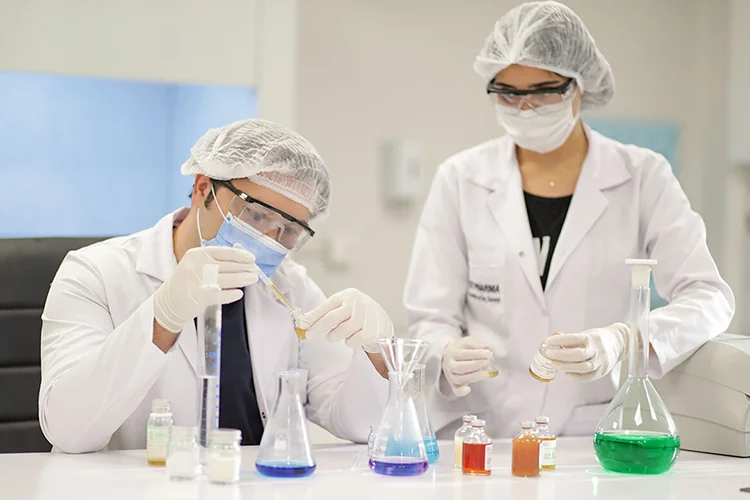
At Elithair, we are living the future today. Under the medical direction of Dr. Abdulaziz Balwi, we are developing modern hair transplantation methods that combine current scientific findings with decades of clinical experience.
Our aim is to understand innovation not as a trend, but as an integral part of safe, precise and patient-oriented treatment.
Innovations with which we define our own quality standards:
Sleep-Deep method: A particularly gentle, low-pain procedure using controlled sedation, enabling a relaxed and controlled hair transplant.
FUE technique: Precise and tissue-sparing extraction of individual hair follicles to maximise the protection of the donor area.
DHI method (Direct Hair Implantation): This method allows for the direct insertion of hair follicles without prior channel preparation. This enables particularly precise control of the growth direction, for a natural hairline and high density.
PRP boost and regeneration therapy: At Elithair, these are used as a complement to hair transplantation to support the healing process and promote scalp regeneration. PRP utilises the body’s own growth factors, which are well-established in regenerative medicine.
At Elithair, we combine medicine, biotechnology and digital innovation into a holistic concept of hair transplantation, transfering future-oriented technologies from research into everyday clinical practice.
Conclusion
What was once researched in space is now changing hair medicine. From phototherapy and nanotechnology to regenerative cell research, many developments from space travel are finding their way into modern treatments.
But those who want a natural, lasting result still rely on the power of real hair follicles, and on clinics like Elithair, which combine future technology and past experience to usher in a new era of hair medicine.
FAQs
How did space research first become relevant to hair and scalp medicine?
Space research initially focused on understanding how the human body adapts to microgravity, particularly in areas such as wound healing, cell communication and tissue regeneration. These findings later proved valuable for regenerative medicine on Earth, including hair and scalp treatments, as hair follicles rely on similar biological repair and growth mechanisms.
Are space-inspired hair treatments suitable for both men and women?
Yes, most space-inspired hair treatments, such as PRP therapy, phototherapy and nanotechnology-based serums, are suitable for both men and women. Treatment suitability depends more on the cause and stage of hair loss than on gender, and should always be assessed individually by medical professionals.
Can phototherapy alone stop hair loss permanently?
No, phototherapy cannot permanently stop hair loss on its own. While low-level laser therapy can stimulate follicles, improve blood circulation and prolong growth phases, it works best as a supportive or preventative treatment rather than a standalone permanent solution, especially in cases of advanced hair loss.
How long does it take to see results from regenerative hair therapies such as PRP or LLLT?
Results from regenerative hair therapies typically become noticeable after three to six months, as hair growth follows a natural cycle. Improvements in scalp health may occur earlier, but visible increases in hair density require patience and consistent treatment.
Are nanotechnology-based hair products safe for long-term use?
Current research suggests that nanotechnology-based hair treatments are generally safe when used under medical supervision. However, as long-term data is still limited, ongoing research and regulatory oversight are essential to ensure safety, efficacy and tolerability over extended periods.
How do space-inspired treatments compare to traditional hair loss medications?
Space-inspired treatments focus on regeneration, cellular communication and tissue health, whereas traditional medications primarily target hormonal pathways or slow hair loss progression. In many cases, regenerative approaches can complement conventional treatments rather than replace them entirely.
Can these technologies prevent hair loss before it becomes severe?
Yes, many of these technologies are particularly effective in early stages of hair thinning. By improving scalp health, circulation and follicle activity, they may slow progression and preserve existing hair, reducing the need for more invasive procedures later on.
Why are natural hair follicles still considered superior to artificial alternatives?
Natural hair follicles possess the ability to grow, adapt, shed and regenerate in response to the body’s biological processes. Artificial follicles, while promising, cannot yet replicate the natural appearance, growth cycles and long-term adaptability of real hair.
Will space-based hair regeneration technologies eventually replace hair transplants?
While future technologies may significantly improve non-surgical hair regeneration, hair transplants remain the most reliable and permanent solution for advanced hair loss at present. It is likely that future treatments will complement, rather than fully replace, transplantation.
How does Elithair ensure patient safety when integrating innovative technologies?
Elithair integrates new technologies only after thorough scientific evaluation and clinical validation. All treatments are performed under medical supervision, combining innovation with established surgical techniques to ensure safety, effectiveness and patient-centred care.

Use our free online assistant tool to submit your hair loss concerns – it only takes a few minutes. We will provide you with a personalised no-obligation quote.
Get a Quote