Ethics in Hair Medicine: What We Could Do Vs. What We Should Do
Medicine is always advancing rapidly, and the field of hair loss is no exception. Genetic interventions, artificially cultivated follicles, even animal testing for the development of new hair therapies; if there is the remotest potential for a new treatment option, it is being tested.
But one question often remains – should we really do everything we could? Especially in such a sensitive area as human appearance, medical progress and ethical responsibility are closely intertwined. In this article, we’ll be taking a closer look at some of the ethical quandries that arise in the field of hair restoration medicine.
- Genetic Engineering & Hair Cloning: Where Does the Boundary Lie?
- Hair Medicine and Social Responsibility: Who Gets Access?
- Animal Testing in Hair Research: An Ethical Dilemma
- The Fine Line Between Progress and Responsibility
- Why Hair Transplantation is the Most Responsible Way
- Conclusion: Ethics Begins with People
- FAQs
Genetic Engineering & Hair Cloning: Where Does the Boundary Lie?

Genetic interventions for hair restoration are a major focus of research. For example, the targeted deactivation of DHT receptors or the activation of dormant stem cells. Cloning hair follicles is also being tested to make an unlimited supply of donor hair available.
However, these procedures raise critical questions:
- How safe are such interventions for the entire body?
- Where does medical treatment end and where does the designer human begin?
- How do we address social inequalities if such procedures remain expensive and exclusive?
What is researched in the laboratory today will affect our understanding of naturalness, identity, and self-determination tomorrow.
Hair Medicine and Social Responsibility: Who Gets Access?

Highly advanced procedures like gene regulation or hair cloning could one day be effective – but for whom? If such methods are only available to the wealthy, a new form of aesthetic inequality will emerge. Hair reconstruction will then no longer be just a question of appearance, but of social status.
Hair medicine must therefore also ask itself ethical questions, such as how do we ensure that progress benefits everyone and not just a select few?
Animal Testing in Hair Research: An Ethical Dilemma
Many new active ingredients against hair loss are first tested on animals, often on mice or rats whose genetic makeup has been altered to simulate hair loss.
Even though animal testing is still standard practice in some areas of research, ethical questions arise:
- Is the cosmetic optimisation of humans a legitimate reason to cause animals to suffer?
- Are there alternatives, e.g., human cell cultures or AI-supported models?
- How much progress is morally justifiable if the price is the lives of others?
Especially in the field of aesthetic medicine, animal testing should be critically examined because it is not about life and death, but about quality of life.
The Fine Line Between Progress and Responsibility

Innovation is important, that much is indisputable. But ethical progress doesn’t just mean that something becomes possible, but that it can be applied well, safely, and responsibly.
Hair medicine must therefore ask itself:
- How much intervention in biology is justified – and at what point does man become a canvas?
- Who protects dignity when beauty is technically created?
- What happens to our self-image when naturalness becomes one option among many?
Digital innovations such as AI-supported hair diagnostics, smart scalp scanners or app-based analysis methods also raise ethical questions – for example, regarding data protection, algorithmic transparency and possible misinterpretation of sensitive health data.
Why Hair Transplantation is the Most Responsible Way
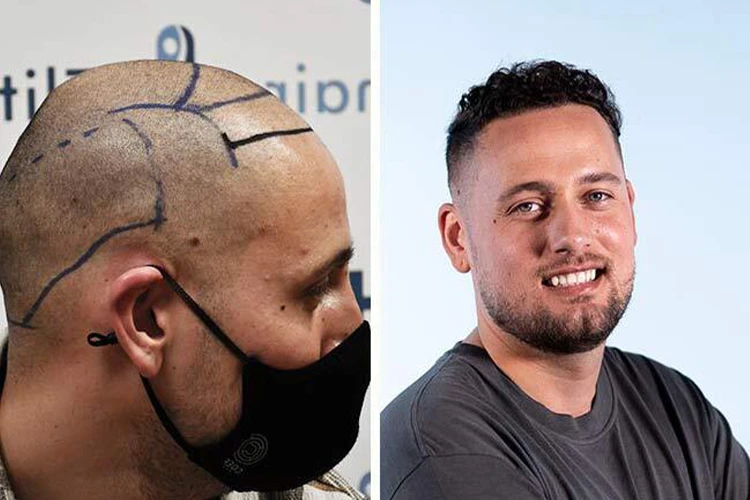
Amidst all these questions, hair transplantation remains a procedure based on respect for the human body:
- It uses the body’s own resources – no foreign cells, no genetic manipulation.
- It does not use animal testing in its application.
- It preserves naturalness and individuality, instead of standardising both.
Modern procedures such as the FUE method and DHI technique enable precise, aesthetically convincing before-and-after results – based on biological processes, not biotechnological speculation.
Conclusion: Ethics Begins with People
Technology can do many things – but not everything that is possible is also right. Hair medicine, like many medical fields, faces the challenge of deciding between feasibility and ethics.
Hair transplantation shows that progress can also be responsible, humane, and sustainable – without artificial detours, without moral gray areas. But with real hair, real feeling, and real respect.
FAQs
What ethical standards currently regulate research in hair restoration medicine?
Hair restoration research is governed by general medical ethics frameworks, including informed consent, patient safety, proportionality of risk and benefit, and regulatory oversight by health authorities. However, as new technologies such as genetic engineering and hair cloning emerge, existing regulations often lag behind innovation, creating ethical grey areas that require updated guidelines and ongoing ethical review.
How are patients informed about ethical considerations when choosing a hair loss treatment?
Ethically responsible clinics provide transparent information about how treatments work, their risks, limitations, and long-term implications. This includes explaining whether a procedure involves experimental methods, animal research, or irreversible biological changes, enabling patients to make informed decisions that align with their personal values.
Can genetic hair treatments have unintended long-term consequences?
Yes. Genetic interventions may affect more than just hair growth, as genes often serve multiple functions within the body. Long-term risks could include immune reactions, unintended cellular changes, or effects that only become apparent years later. This uncertainty is a key ethical concern and a reason why such treatments remain controversial.
How does hair loss treatment impact mental health and self-identity?
Hair loss can significantly affect self-esteem, confidence, and social wellbeing. Ethical hair medicine acknowledges this psychological dimension and aims to support patients holistically, avoiding solutions that exploit insecurity or promote unrealistic beauty standards.
Should aesthetic medicine be held to the same ethical standards as life-saving treatments?
While aesthetic medicine does not usually address life-threatening conditions, it should still adhere to strict ethical standards. Because it influences identity, self-worth, and social perception, ethical responsibility may be even greater, particularly when risks, costs, or animal suffering are involved.
How can clinics prevent the commercialisation of insecurity in hair loss treatments?
Clinics can act responsibly by avoiding aggressive marketing, unrealistic promises, or pressure-based sales tactics. Ethical practice focuses on realistic outcomes, medical necessity, and patient wellbeing rather than maximising profit through emotional vulnerability.
What role does sustainability play in ethical hair medicine?
Sustainability includes minimising environmental impact, reducing unnecessary laboratory experimentation, and choosing treatments that rely on existing biological resources. Procedures such as hair transplantation align well with this principle, as they reuse the patient’s own follicles without ongoing resource consumption.
Are there international differences in ethical standards for hair medicine?
Yes. Ethical regulations and enforcement vary widely between countries. Some regions permit experimental or poorly regulated treatments that would not be allowed elsewhere. This highlights the importance of global ethical discourse and patients seeking treatment from medically and ethically regulated providers.
How can patients identify an ethically responsible hair clinic?
An ethical clinic prioritises patient education, uses evidence-based methods, avoids experimental procedures without clear disclosure, and places health above aesthetic trends. Transparency, qualified medical staff, and realistic expectations are key indicators of ethical practice.
Will ethical considerations shape the future of hair medicine innovation?
Increasingly, yes. Public awareness, regulatory scrutiny, and societal debate are pushing innovation towards safer, more transparent, and ethically defensible solutions. Future progress in hair medicine is likely to be judged not only by effectiveness, but by how responsibly it is achieved.

Use our free online assistant tool to submit your hair loss concerns – it only takes a few minutes. We will provide you with a personalised no-obligation quote.
Get a Quote