New Hair Loss Treatment Clascoterone: A Glimmer of Hope or Future Medicine?
Hair loss is rarely just a cosmetic issue. For many men, it begins gradually—and with it grows uncertainty, frustration, and the feeling of watching one’s own body change without being able to intervene. Consequently, attention peaks whenever new medical developments offer hope.
Currently, the active ingredient Clascoterone is providing exactly that hope. For the first time in years, large-scale clinical studies are showing significant effects on hereditary hair loss. But what does this mean specifically for those affected? And how realistic are the expectations?
- What is Clascoterone?
- What have the current studies shown?
- Why Clascoterone is considered medically significant
- What Clascoterone can achieve – and what it cannot
- Hair Transplantation: The only permanently established solution for hair loss
- How new active ingredients and hair transplants work together
- Conclusion: Progress with Perspective
What is Clascoterone?
Clascoterone is a topically applied antiandrogen agent applied directly to the scalp. It specifically targets the hormonal trigger of the most common form of male hair loss: androgenetic alopecia.
In brief:
- Clascoterone blocks dihydrotestosterone (DHT) directly at the hair follicle.
- DHT is considered the primary cause of genetic hair loss.
- The effect is locally restricted, not systemic.
- The hormonal balance of the rest of the body remains largely unaffected.
This distinguishes the active ingredient significantly from previous hormonal therapies taken orally, which sometimes caused severe side effects.
What have the current studies shown?
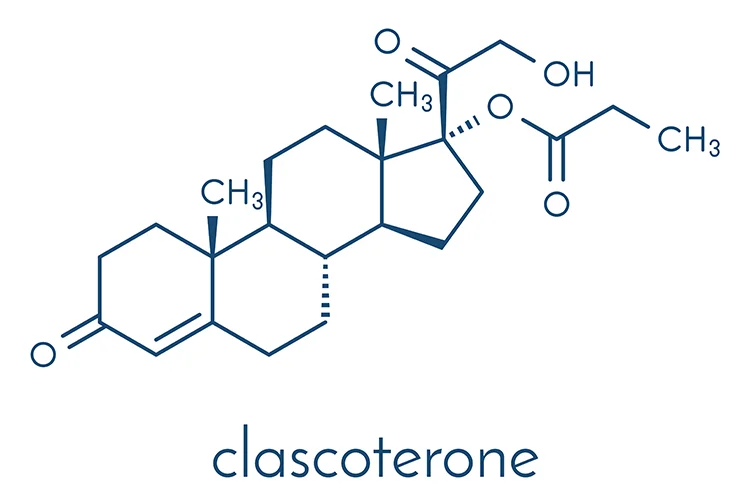
Positive results from a Phase II study suggested that Clascoterone targets the hormonal cause of hereditary hair loss directly. In subsequent clinical trials involving approximately 1,500 men, Clascoterone 5% showed significant improvements compared to a placebo.
Key results at a glance:
- In one study, the treated area showed over 5 times more hair than the placebo group.
- In the second study, the figure was approximately 1.7 times more hair compared to the placebo.
- Patients subjectively reported:
- Thicker hair growth.
- Improved hair quality.
- An overall more positive perception of their hair’s appearance.
Particularly relevant: The reported side effects were on par with the placebo. To date, no severe hormonal or systemic effects have been identified.
Why Clascoterone is considered medically significant
The uniqueness of this active ingredient lies in its mechanism of action:
- Direct blockade of the androgen receptor at the hair follicle.
- No significant absorption into the bloodstream.
- No interference with the body’s overall hormonal metabolism.
Thus, Clascoterone addresses the biological cause of male hair loss for the first time without putting a hormonal burden on the body as a whole. However, caution is advised: crucial 12-month safety data are still pending. Only then can applications for approval be submitted in the USA and Europe.
What Clascoterone can achieve – and what it cannot
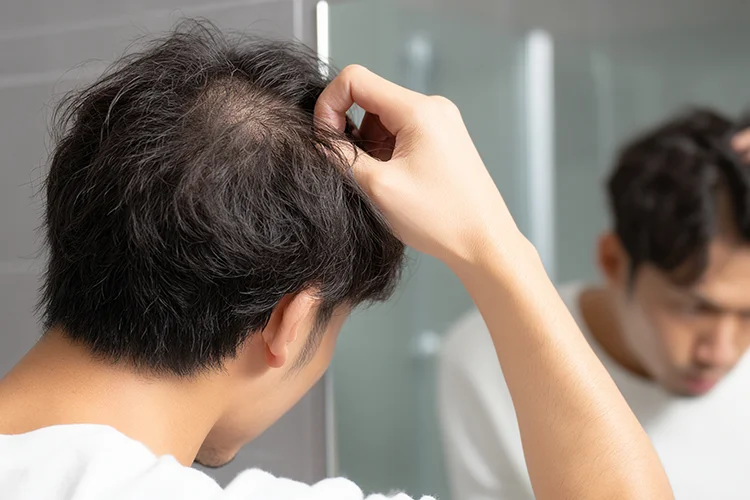
As promising as the results are, a realistic assessment is vital.
Potential benefits:
- Slowing down hair loss.
- Partial thickening in early stages.
- An option for men who wish to avoid systemic medication.
Clear limitations:
- Dead hair follicles cannot be regenerated.
- Advanced bald areas cannot be “creamed back” to life.
- Long-term experience in everyday clinical practice is still lacking.
Clascoterone is therefore not an immediate solution, but a potential therapeutic approach for the future—primarily for the early stages of hair loss.
Hair Transplantation: The only permanently established solution for hair loss
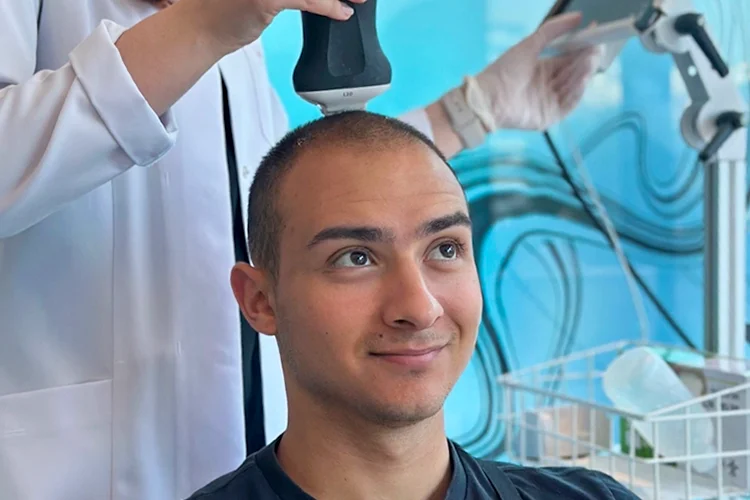
Once hair follicles have died, any drug therapy reaches its limits. In these cases, hair transplantation remains the medical gold standard.
At Elithair, hair transplants are performed exclusively under medical responsibility. Treatments are planned and carried out by specialised teams of doctors who have focused on modern transplantation procedures for many years. This medical specialisation is crucial for a natural, permanent result.
Modern, proven procedures based on the patient’s own hair are used, enabling lifelong growth.
Overview of the most important methods:
- FUE Method (Follicular Unit Extraction): Gentle extraction of individual hair follicles from the donor area—minimally invasive and with minimal scarring.
- DHI Technique (Direct Hair Implantation): Precise insertion of follicles using a special implantation tool—allowing for a particularly controlled growth direction, high density, and natural-looking hairlines.
The result:
- Naturally growing hair.
- Permanently integrated hair follicles.
- Full freedom to cut, style, and care for your hair.
- No hormonal dependency of the transplanted hair.
Before-and-after images impressively demonstrate what medication cannot achieve: visible hairlines, genuine density, and a lasting transformation of appearance—medically planned and individually implemented.
How new active ingredients and hair transplants work together
Innovative medications like Clascoterone could complement hair medicine meaningfully in the future, for example:
- To stabilise existing hair.
- To provide support after a hair transplant.
- To delay further thinning.
However, they do not replace a hair transplant when it comes to lost hair substance.
Conclusion: Progress with Perspective
Clascoterone is one of the most exciting active ingredients in hair loss research in recent years. The study results offer hope, especially for men in the early stages of androgenetic hair loss.
At the same time, patience is required until widespread application, approval, and long-term evaluation are achieved. Whether the active ingredient lives up to the promise of the initial data will only be revealed in the coming years.
For everyone suffering from visible hair loss today who seeks a permanent, predictable solution, hair transplantation remains the medically established option—with real hair, real results, and a new sense of control over one’s own reflection.

Use our free online assistant tool to submit your hair loss concerns – it only takes a few minutes. We will provide you with a personalised no-obligation quote.
Get a Quote