Hair Loss Impact: UK Hair Confidence Report 2026
At a time when social media encourages constant comparison, men’s appearance is facing growing scrutiny. Research shows that two-thirds of men say social media impacts their body confidence, highlighting the role online comparison plays in shaping self-perception. Among the most common appearance concerns for men is hair loss, affecting an estimated 6.5 million in the UK.
But how much does hair loss affect men’s confidence, and which aspects of their appearance do they feel most pressure to look after?
Our new research investigates these questions and more in the 2026 Hair Loss Report, highlighting the broader issue of male appearance anxiety. Based on the experiences of 2,000 UK men, the report explores the realities of living with hair loss on a national scale.
Hair and Confidence: The Link Between Hair Loss and Male Self-image
According to our survey, almost half of men (48%) say their hairline is likely to impact their self-confidence. This figure rises even higher among 18-24 year olds (65%) and those with an already slightly receding hairline (61%), indicating that younger men and those noticing early changes are particularly sensitive to how their hair affects the way they feel about themselves.
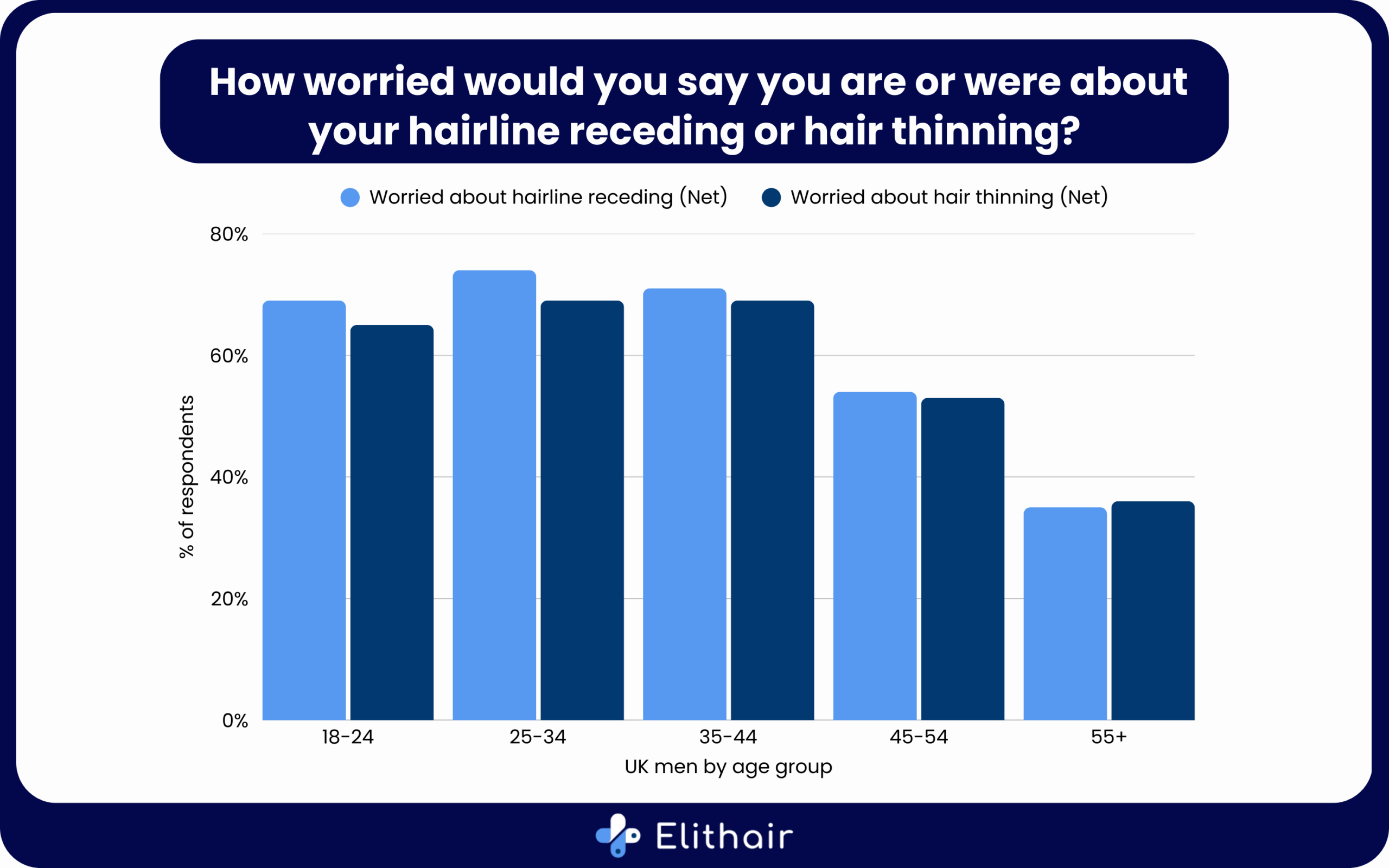
Over half of men (55%) also said they were worried about their hairline receding, with Gen Z (71%), Millennials (72%) and Londoners (66%) most concerned. This suggests that hair loss is not only a personal issue but also one influenced by societal pressures and city living, where appearance is often more scrutinised.
Early Pressures: When Men First Worry About Hair Loss
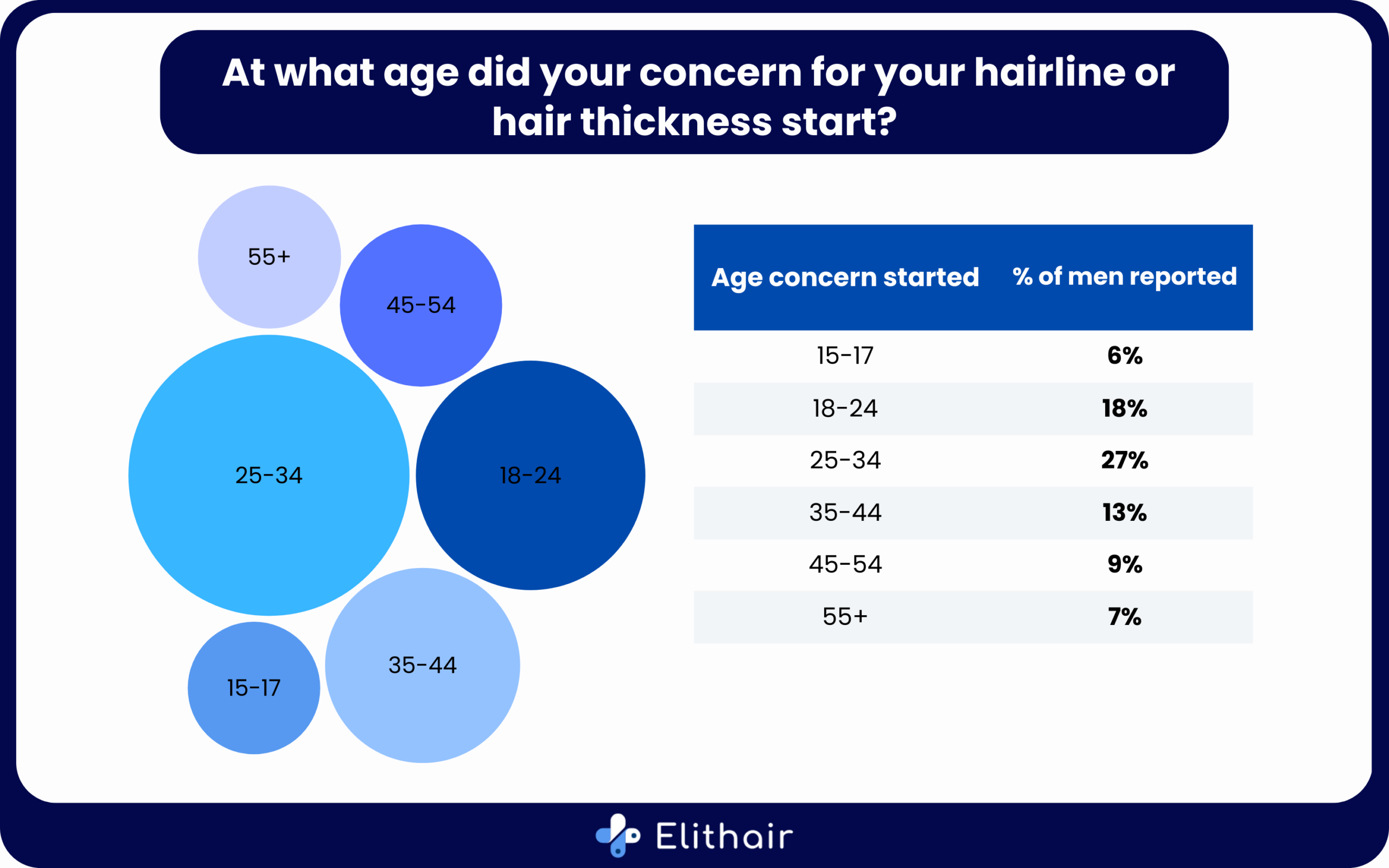
Hair loss typically starts to appear around the late twenties to early thirties, meaning these worries often begin at a young age. Our survey found that 27% of men start worrying about their hairline between the ages of 25-34, while 18% begin to worry as early as 18-24.
The Most Popular Age for Hairline or Hair Thickness Concerns Starts
How Worried Men Are About the Hairline Receding or Hair Thinning by Age
The Emotional Impact of Hair Loss
It’s clear that hair loss impacts male self-confidence, but how does it actually make men feel? Our research revealed that hair loss makes 34% of men feel old, 27% feel unattractive, and 25% feel unhappy. By contrast, having a full head of hair made men feel confident (48%), happy (38%) and attractive (37%).
Feelings Associated With Losing Hair
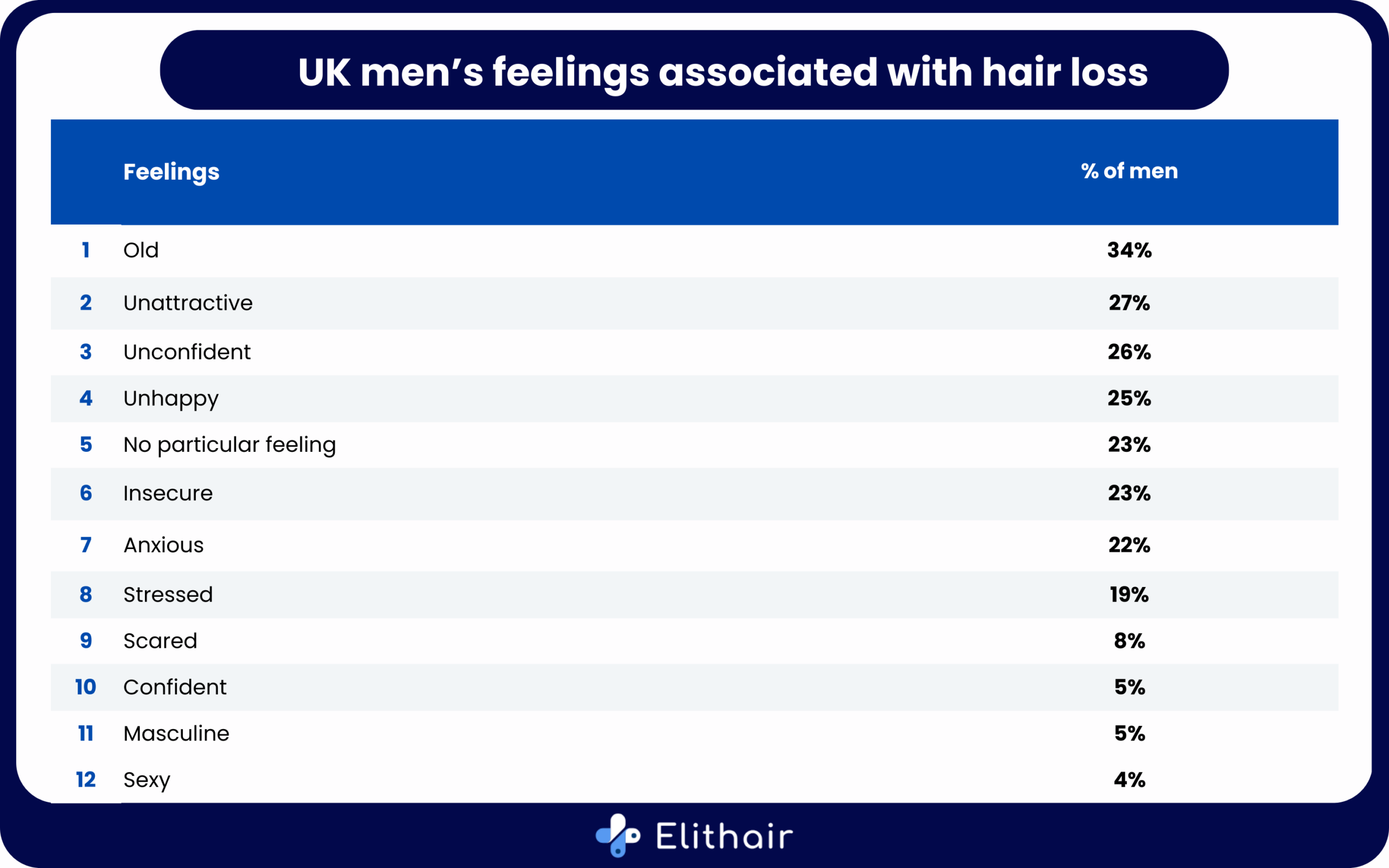
*Participants could select as many relevant feelings
Feelings Associated With a Full Head of Hair
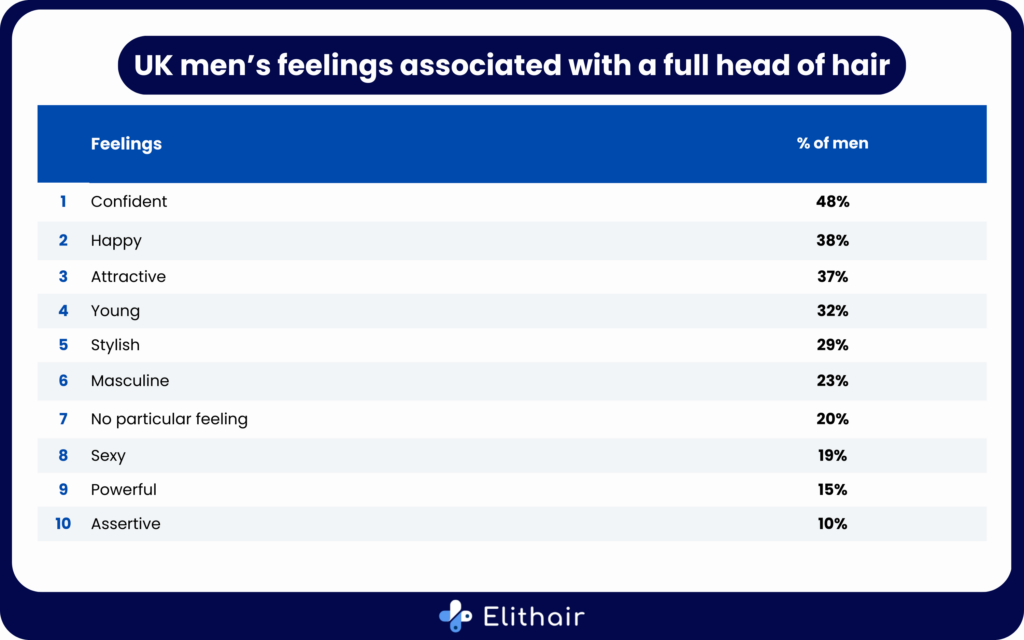
*Participants could select as many relevant feelings
Hair Loss and Social Acceptance
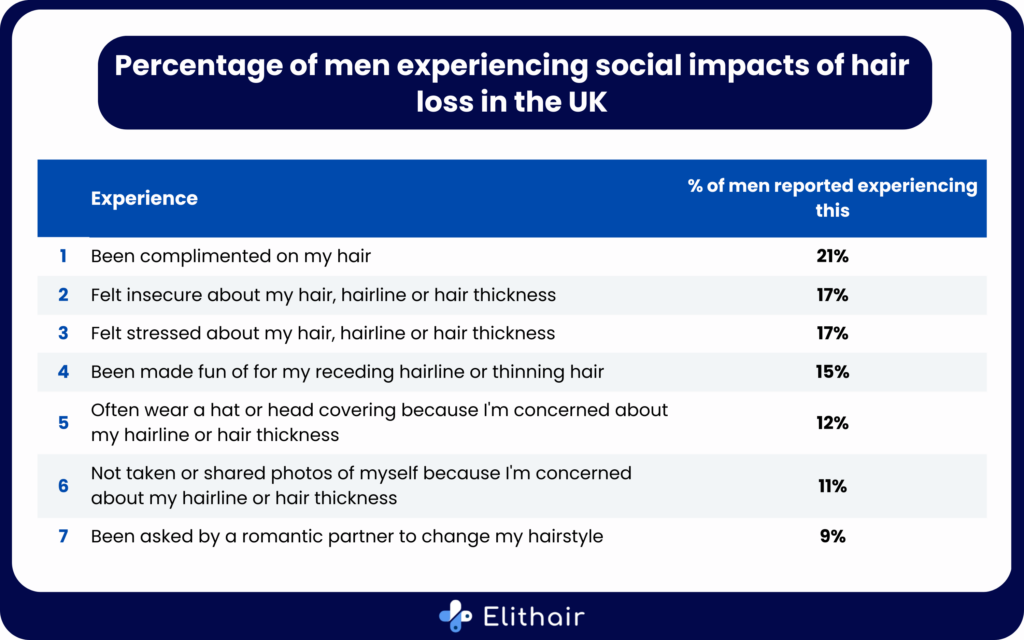
Hair concerns also influence social behaviour. Only 1 in 5 men (21%) say they have ever been complimented on their hair, 15% say they have been made fun of for it, and 1 in 10 (11%) admit they avoid having their photo taken because of their hairline. These results underline the ways hair loss can have a significant impact on men’s social lives and day-to-day interactions.
Percentage of Men Experiencing Social Impacts of Hair Loss
The Appearance Factors Men Feel Most Self-conscious About
From hair loss to skin concerns, men experience a range of appearance pressures that can influence how they feel day to day. But which physical features do men worry most about?
How Different Appearance Factors Impact Male Confidence Levels
Looking at the bigger picture, our survey also examined how hair loss fits into the wider narrative of physical features that men feel most self-conscious about. Responses were categorised as likely to impact or highly likely to impact self-confidence.
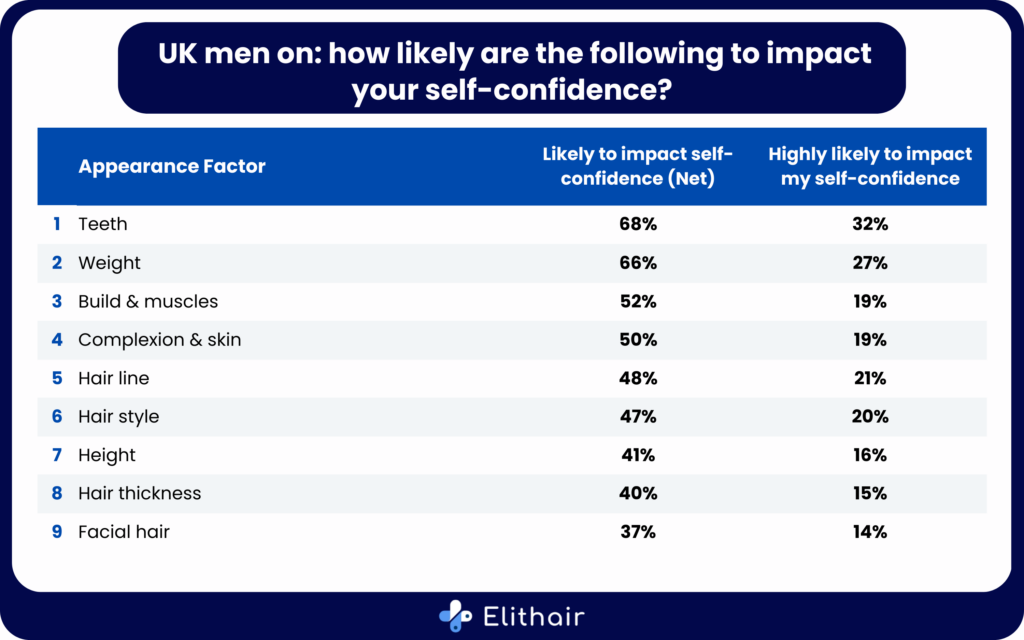
*Participants could select as many factors as relevant
Top 5 factors that impact male self-confidence overall:
- Teeth – 68%
- Weight – 66%
- Build & muscles – 52%
- Complexion & skin – 50%
- Hairline – 48%
Top 5 factors ‘highly likely to impact my self-confidence’ with the most prominence:
- Teeth – 32%
- Weight – 27%
- Hairline – 21%
- Hair style – 20%
- Build & muscles – 19%
Notably, hair concerns are more likely to be poignant appearance factors, with ‘hairline’ (21%) and ‘hairstyle’ (20%) named as factors highly likely to impact UK men’s self-confidence.
Top 5 factors that impact male self-confidence for men aged 18-24
- Teeth – 79%
- Weight – 74%
- Build & muscles – 73%
- Hair style – 72%
- Hairline – 65%
Among men aged 18–24, the top five factors are teeth (79%), weight (74%), build and muscles (73%), hairstyle (72%), and hairline (65%), highlighting the emphasis young men place on overall appearance and grooming.
Appearance and Mental Health: What’s the Correlation Between Appearance and Impact on Men’s Mental Wellbeing?
It’s important to recognise the connection between appearance and an individual’s sense of wellbeing and confidence. Our research revealed that a quarter of all men (25%) say that their appearance negatively impacts their mental health.
In particular, younger generations are more likely to say their appearance negatively impacts their mental health, with 18-24-year-old men being almost two times more likely to report that their appearance negatively impacts their mental health than men aged 25-34.
Men Who Report That Their Appearance Negatively Impacts Their Mental Health
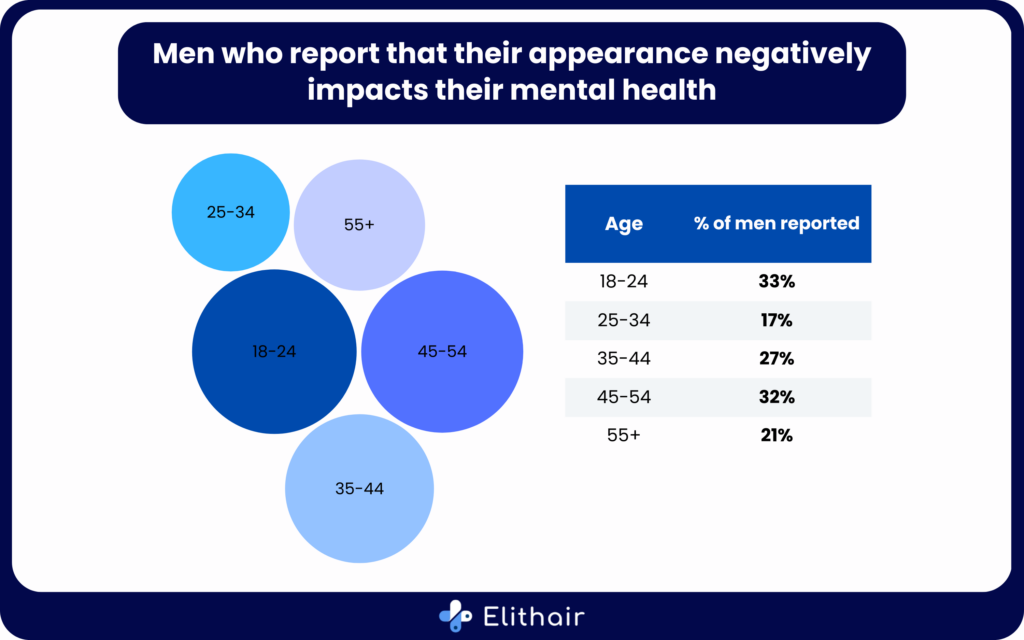
In addition, our research found that men already experiencing hair loss are more likely to report that their appearance negatively impacts their mental health.
Men Who Report That Their Appearance Negatively Impacts Their Mental Health by Hair Type
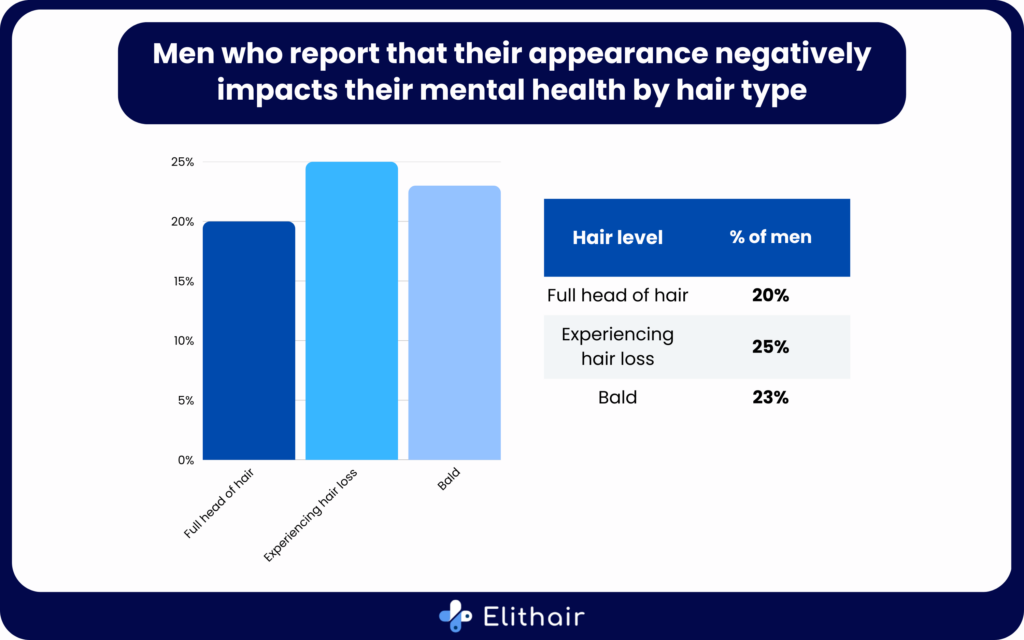
Dr. Abdulaziz Balwi, leading hair surgeon at Elithair, provides further insight into how hair loss can impact mental health in men:
Dr. Abdulaziz Balwi says: “Hair changes can deeply influence how a person feels, often leading to feelings of low self-esteem, anxiety, or even depression. Because hair is so closely linked to identity and personal appearance, thinning or loss can make individuals feel less confident or attractive and may cause them to withdraw from social situations. Despite how common it is, there is still a great deal of stigma surrounding hair loss, which can make individuals hesitant to speak openly about their experiences.”
The Effect of Hair Loss on Men’s Romantic Lives
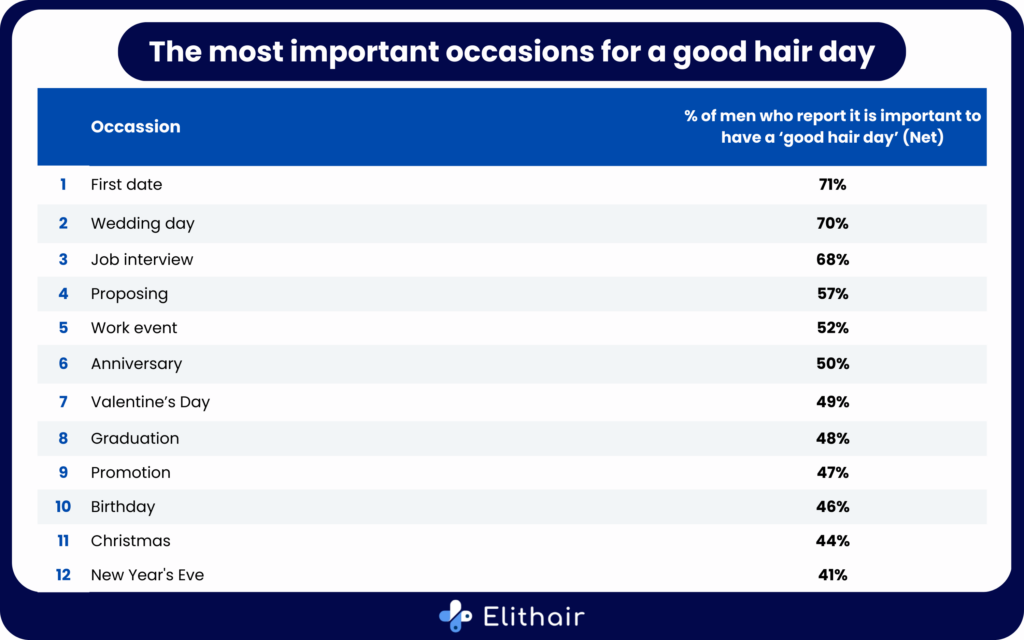
The Most Important Occasions for a ‘Good Hair Day’
Similar to its effect on social life, hair loss can also have a significant effect on dating and romantic relationships. In fact, our survey found that first dates ranked as the most important occasion for men to have a good hair day. More than seven in ten men (71%) said it mattered to them, followed closely by wedding days (70%) and job interviews (68%).
Younger men placed even greater importance on looking their best for romantic milestones. Among Gen Z respondents, 79% said having good hair was important for a first date, 78% for a wedding day and 73% for a proposal.
Percentage of Men Who Say a Good Hair Day is Important by Notable Occasions:
Does Hair Loss Impact Men’s Approach to Dating?
Hair health and coverage can have an impact on men’s approach to dating, with a full head of hair making men feel confident (48%) and attractive (37%), which will trickle into their dating lives. Conversely, hair loss contributes to a quarter of British men feeling unattractive (27%) and unconfident (26%)
In addition, almost one in ten men (9%) said they have been asked to change their hairstyle by a romantic partner, while 6% admitted they would actively avoid pursuing a romantic connection due to worries about their hairline or hair thickness. This figure rises among younger men, with 11% of those aged 18 to 24 saying hair concerns have stopped them from dating.
How to Build Confidence When Dealing with Hair Loss
While hair loss can bring new appearance concerns, there are constructive ways men can protect their self-image and feel more assured. Below, Dr. Abdulaziz Balwi, leading hair surgeon at Elithair, explains what those struggling can do to feel more confident in themselves.
Dr. Abdulaziz Balwi says: “When dealing with the emotional side of hair loss, it’s important to start by opening up about the way you’re feeling, whether that’s to a friend, family member or licensed therapist. Discussing your feelings with others can bring comfort and help you see your experience from a more balanced point of view.
“Alongside emotional support, maintaining a consistent scalp and hair care routine is key. Even small things like using the right products for your hair type or implementing a consistent wash routine can improve appearance and self-esteem.
“When hair loss becomes more severe, it’s important to visit a qualified dermatologist or trichologist who can assess the cause and recommend appropriate treatment options. Depending on the type of hair loss, treatments may include medications, targeted therapies, or hair transplants designed to encourage healthy regrowth. These approaches not only enhance appearance but can also significantly boost personal confidence.”
Methodology
Elithair surveyed 2,000 nationally representative males in the UK aged 18+ on the topics of appearance, confidence, and wellbeing in relation to physical attributes. The research was in collaboration with Censuswide and was conducted between 18.11.2025 – 20.11.2025.

Use our free online assistant tool to submit your hair loss concerns – it only takes a few minutes. We will provide you with a personalised no-obligation quote.
Get a Quote